
Embedded Perspectives
Automotive Ethernet
9 articles tagged with Automotive Ethernet.
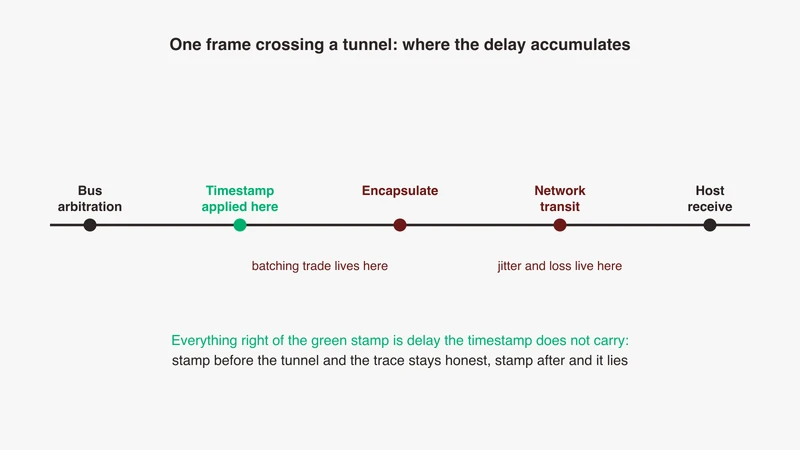
CAN-to-Ethernet Gateways and Tunnelling Legacy Buses
One word, two jobs. A CAN-to-Ethernet gateway either carries a frame across an IP network unchanged, for loggers and remote benches, or stops the frame and re-expresses its signals as service calls. The two have different failure modes, different timing costs and different questions to ask a supplier. This article separates the jobs, states what open documentation actually shows about encapsulation and configuration, and gives a checklist you can put to a vendor. Written by the GSAS Micro Systems engineering team in India.
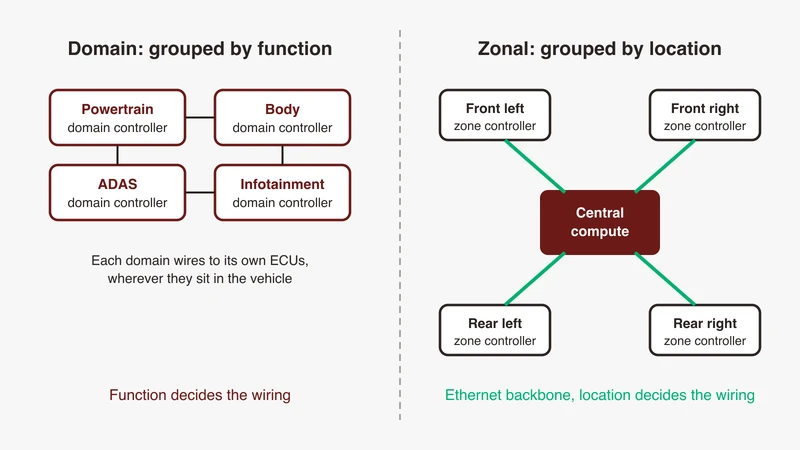
Domain vs Zonal E/E Architectures Explained
Domain architectures group ECUs by function, zonal architectures group them by where they sit in the vehicle. This guide is the engineer's read on the difference: what physically moves, what the in-vehicle network has to become, and what happens to diagnostics, rest bus simulation and time sync. It also refuses to repeat the harness mass and ECU-count figures that circulate without a public source, and says exactly which claims are citable and which are not. Written by the GSAS Micro Systems engineering team in India.
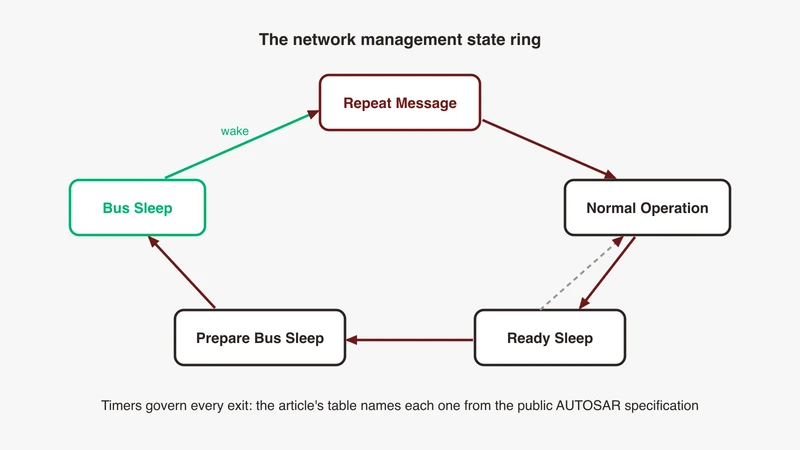
ECU Testing over Ethernet: Startup, Shutdown and Wake
A bench that powers the ECU, waits for it to settle and then starts capturing has already skipped three of the four phases where integration defects live. This is the lifecycle version of ECU testing over Ethernet: what a ping does not prove, the AUTOSAR network management state set and the timers that govern it read out of the public specifications, why one node holds a whole cluster awake, and a phase-by-phase table of stimulus, observable, pass criterion and capture method you can write test cases from this week. Written by the GSAS Micro Systems engineering team in India.
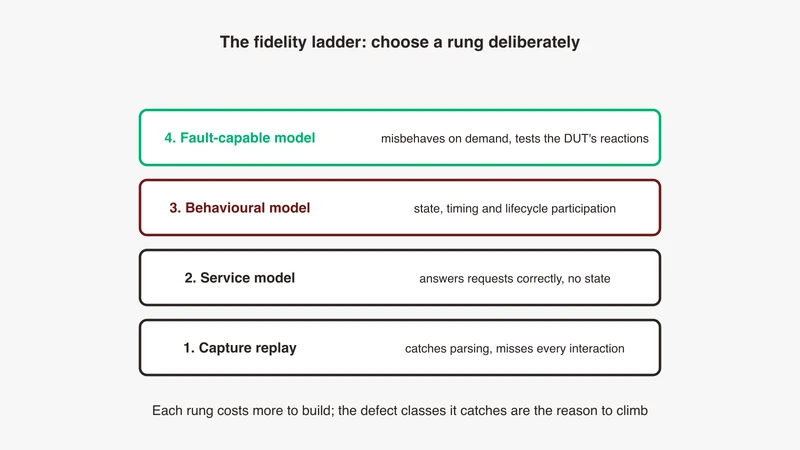
Rest Bus Simulation for Ethernet-Based Vehicles
Rest bus simulation often arrives in an Indian engineering team as a line in a customer requirement document, defined for CAN and left undefined for Ethernet. The difference matters: on a service-oriented network you are simulating discovery, endpoints and multicast membership, not replaying cyclic frames, and a simulator that answers correctly and instantly can hide the timeout handling you were supposed to be testing. This article sets out the fidelity ladder, the inputs you need before you build one, and where an Ethernet rest bus stops representing the vehicle. Written by the GSAS Micro Systems engineering team in India.
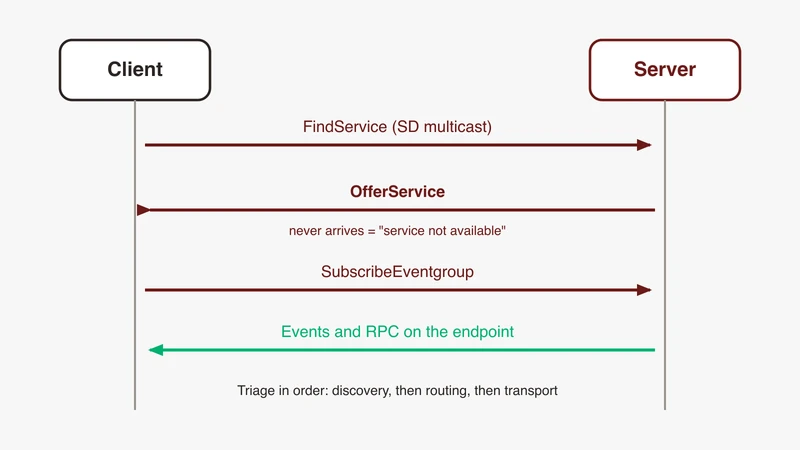
SOME/IP Service Not Available: Debugging Service Discovery
The same SOME/IP failure has been filed and refiled on the COVESA vsomeip tracker and each thread solves one instance in isolation, so there is no single writeup to read. This is that writeup: the split between discovery, routing and transport, the test that tells you which one you are in, and the configurations that produce an identical client message, including the one where the routing manager decides your service is internal and never offers it on the wire. Every option name is checked against the vsomeip repository and every protocol claim against the AUTOSAR SOME/IP-SD specification. Written by the GSAS Micro Systems engineering team in India.
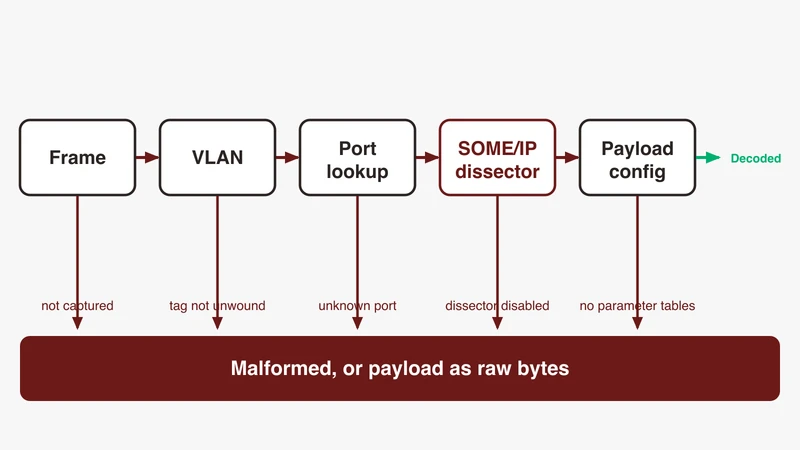
Wireshark Not Decoding SOME/IP? The Complete Fix List
SOME/IP shows up as Malformed DNS, or as plain UDP, and the capture looks broken. The Wireshark SOME/IP dissector ships with an empty port range and its heuristics off by default, so the frames arrive and nothing claims them. This is the ordered fix list, checked against the dissector source, the Wireshark user guide and the AUTOSAR specifications, written by the GSAS engineering team in India for benches in Bengaluru, Pune, Chennai and Hyderabad.
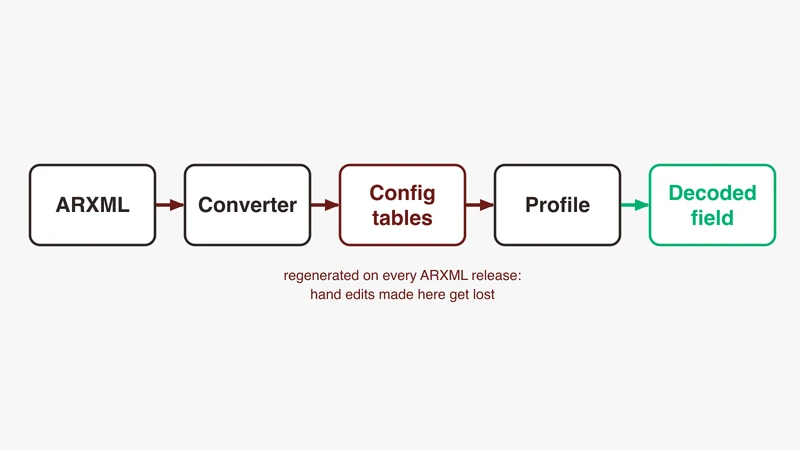
Decoding SOME/IP Payloads in Wireshark from ARXML
Wireshark reads SOME/IP headers off the wire, but payload fields only appear once you load parameter definitions into its configuration tables. This walkthrough covers what those thirteen tables hold, how the open FibexConverter project generates them, why the ARXML your project owns is not the input the tool takes, and how to verify a decode instead of trusting it. Written by the GSAS engineering team in India for bench and validation teams working on service oriented communication.
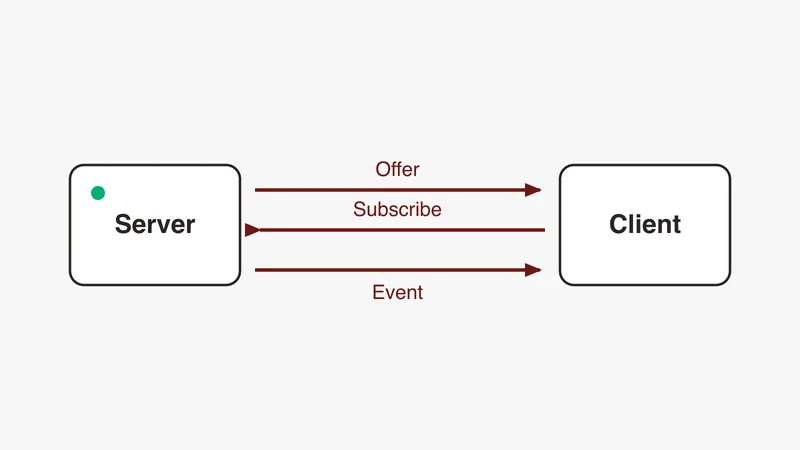
SOME/IP explained: message format, service discovery and how to decode it
A field guide to SOME/IP for engineers with a capture open: the 16 byte header read offset by offset from the AUTOSAR PRS, the service discovery exchange as it happens on the wire, and why Wireshark decodes nothing until you tell it which UDP port to look at. Written by the GSAS engineering team in India for teams bringing up service oriented communication on a bench.
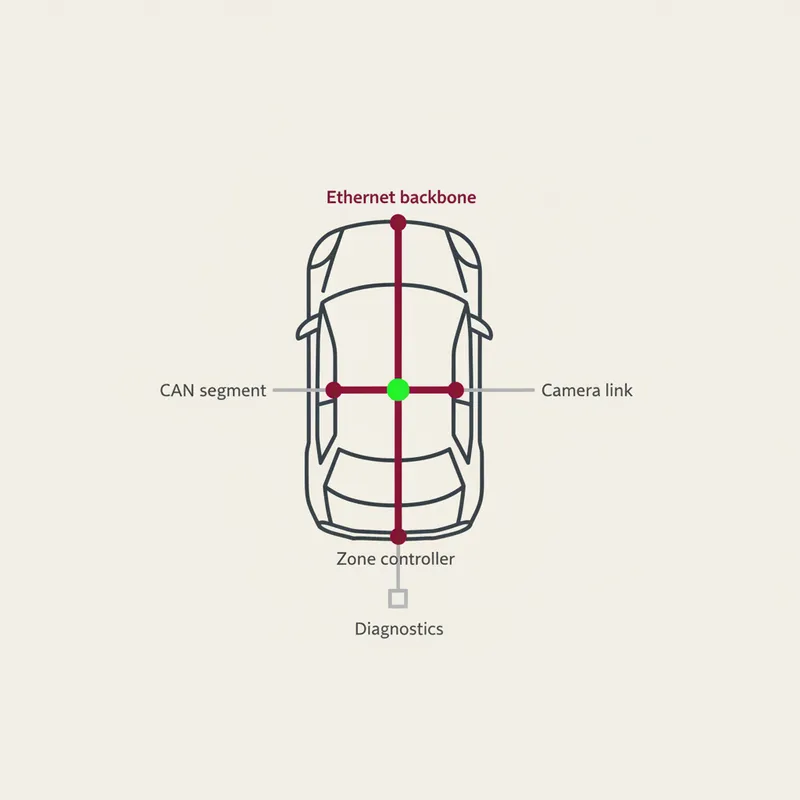
What Is Automotive Ethernet? A Complete Guide for Engineers in India
Automotive Ethernet is standard IEEE 802.3 Ethernet carried over a single twisted pair inside a vehicle. This guide from GSAS Micro Systems maps the T1 physical layer family, the protocol stack above it, the OPEN Alliance conformance vocabulary and the bench workflow, written for engineers in India who have been handed a T1 link and told to make it work.
Questions about Automotive Ethernet?
Our application engineers help teams evaluate tools, plan validation, and scope pilots across India.