A Category That Has Matured
PC-based test instruments, oscilloscopes, data loggers, signal generators, and spectrum analyzers that connect to a standard PC via USB, were once considered budget alternatives to “real” benchtop equipment. That perception no longer matches reality.
Companies like Pico Technology have spent over three decades refining PC-based measurement hardware to the point where USB oscilloscopes match or exceed benchtop specifications in key parameters: bandwidth up to 500 MHz, sampling rates up to 5 GS/s, and buffer memory depths (up to 4 GS) that no benchtop instrument in the same price class can match.
For Indian engineering teams, facing budget constraints, growing instrumentation needs, and increasing demand for portable and automated test solutions, the PC-based approach is increasingly compelling.
The Technical Case
Compute Power Is Already on Your Desk
A modern engineering workstation, Intel Core i7 or AMD Ryzen, 16-32 GB RAM, SSD storage, provides more processing power than any oscilloscope’s embedded processor. By offloading the display, processing, and analysis to the PC, a PC-based instrument allocates its entire hardware budget to what matters: the analog front end, ADC, and signal conditioning.
This is why PC-based oscilloscopes like the PicoScope 6000E can offer 4 GS of buffer memory, memory that would be prohibitively expensive to include in a standalone instrument.
Display Size Scales with Your Monitor
A benchtop oscilloscope’s display is typically 7 to 10 inches. A PC-based scope displays on whatever monitor you connect, 15-inch laptop, 24-inch desk monitor, 32-inch ultra-wide, or even a 4K display. For signal analysis tasks that benefit from screen real estate (multi-channel capture, protocol decoding, FFT spectrum display), this is a meaningful ergonomic advantage.
Software Updates Are Continuous
PC-based instrument software runs on a general-purpose OS, making updates easier to develop and distribute. Pico Technology’s PicoScope 7 software receives regular feature updates, new protocol decoders, performance improvements, UI enhancements, delivered free for the lifetime of the instrument.
Benchtop instruments receive firmware updates less frequently, and major feature additions often require paid licence upgrades.
Multi-Instrument Orchestration
Because PC-based instruments are software-controlled, orchestrating multiple instruments from a single script is straightforward. An automated test system might combine a PicoScope oscilloscope, a PicoLog data logger, and a PicoVNA network analyzer, all controlled from a single Python script using PicoSDK.
The Economic Case
Capital Expenditure
PC-based instruments cost less than equivalent-specification benchtop instruments because they do not include a display, enclosure, power supply, or front-panel interface.
For an Indian R&D lab equipping 10 engineering workstations with oscilloscopes, the capital savings on PC-based instruments can fund additional measurement equipment (probes, current clamps, differential probes) that would otherwise be cut from the budget.
No Hidden Licence Costs
PicoScope includes all protocol decoders, spectrum analysis, and math channels in the base software, no per-feature licensing. This contrasts with benchtop oscilloscopes where protocol decoders, advanced analysis features, and memory upgrades are sold as separate licences that can double the total instrument cost.
Reduced Lab Infrastructure
PC-based instruments are powered by USB, no mains power cables, no bench power strips, no UPS sizing for instrument racks. For labs in Indian cities where power quality and space are constraints, particularly in Bengaluru, Pune, Hyderabad, and Chennai tech corridors where commercial real estate costs are rising, the infrastructure reduction matters.
Fleet Scalability
When project needs increase, adding a PC-based oscilloscope means purchasing a USB device and connecting it to an existing PC. No additional desk space, no additional power outlet, no additional rack space. This scalability is particularly valuable for project-based R&D organizations where instrumentation needs fluctuate.
The Portability Case
For field service, on-site commissioning, and customer support applications, PC-based instruments provide a capability that benchtop instruments cannot match:
- A PicoScope fits in a laptop bag alongside the laptop
- Total weight: under 2 kg (scope + laptop)
- No mains power required for the instrument (USB powered)
- Full measurement capability anywhere the engineer can open a laptop
Indian engineering teams supporting installations across the country, from factory floors in Delhi NCR and Mumbai to customer sites in tier-2 cities, benefit directly from this portability.
The Automation Case
The strongest argument for PC-based instruments is programmability. Every PicoScope can be controlled via PicoSDK, with bindings for Python, C, C#, LabVIEW, and MATLAB. This enables:
- Production test automation: Script the measurement sequence, run it on every unit, generate pass/fail reports
- Design characterization: Sweep parameters programmatically and collect data across thousands of operating points
- CI/CD integration: Include hardware measurements in continuous integration pipelines for embedded systems development
What Has Not Changed
PC-based instruments are not universally superior. Standalone operation, physical controls, and the institutional familiarity of benchtop instruments remain relevant for many workflows. The shift is not replacement, it is expansion of the instrumentation toolkit.
Why Buy Pico Technology from GSAS
GSAS Micro Systems is an authorized Pico Technology partner, providing the full PicoScope and PicoLog range with INR invoicing, demo units, and application engineering support.
- Offices in Bengaluru, Hyderabad, Chennai, Pune, Mumbai, and Delhi NCR
- Demo units for hands-on evaluation
- PicoSDK integration support for automated test applications
- Training workshops for PicoScope and pyPicoSDK
Also appears in:
Interested in Pico Technology tools?
Talk to our application engineers for personalized tool recommendations.
More from Pico Technology
View all →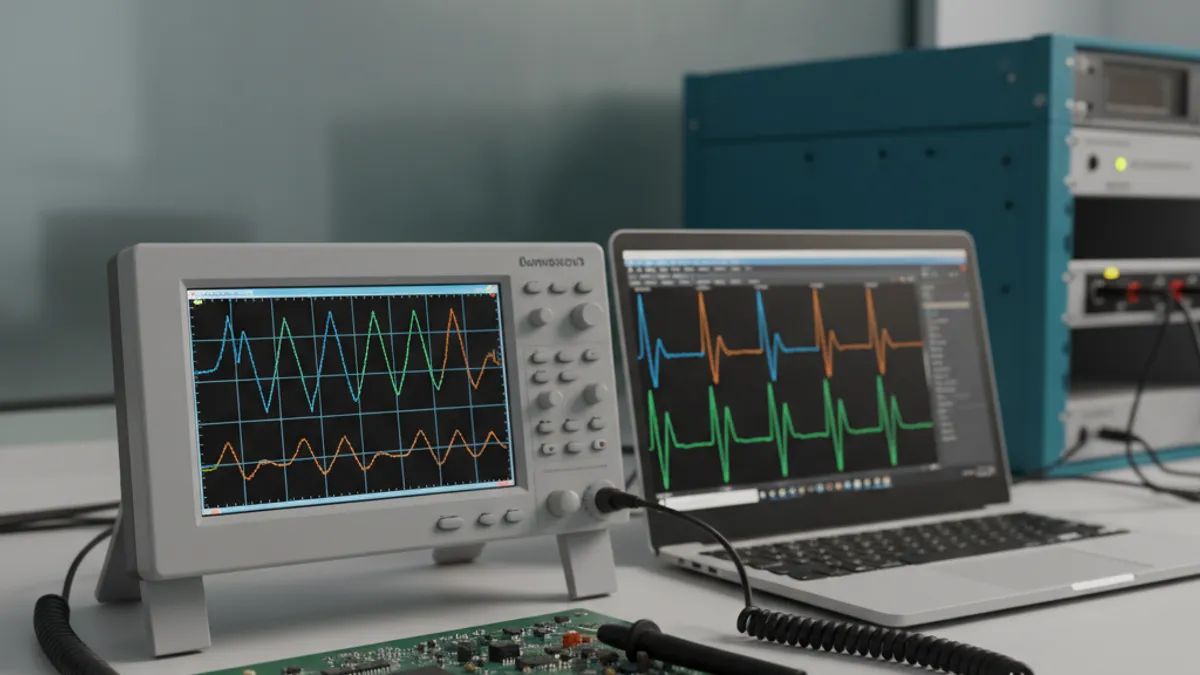
How to Buy an Oscilloscope in India (2026): USB vs Benchtop, Bit Depth, Bandwidth: A Buying Guide
5 Jun · 11 min
PicoScope 5000D vs 5000E: Native 16-Bit or FlexRes? A Buyer's Guide for Indian Labs
4 Jun · 11 min
PicoScope 5000E in India: The World's First 4-Channel 16-Bit USB Oscilloscope, Explained
4 Jun · 11 min
PicoScope 7 Goes Native Arm64: Apple Silicon, Snapdragon Windows and Arm Linux Test Benches in India
4 Jun · 11 min
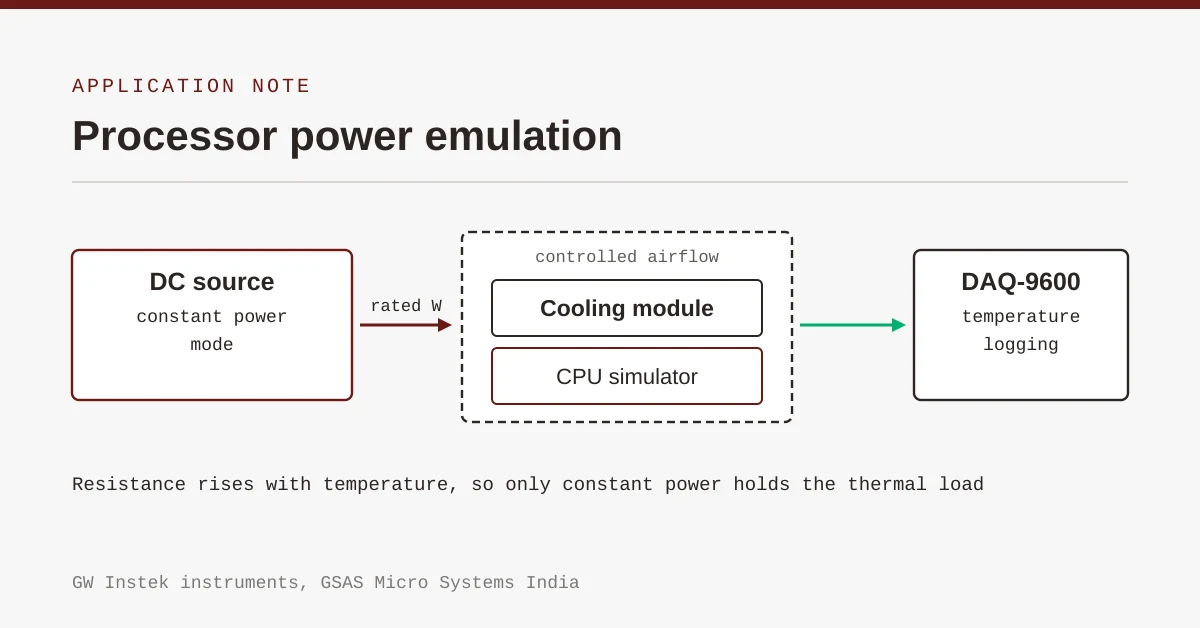
Emulating Processor Power for Thermal Testing: Why Constant Power
7 Oct · 7 min
CRPS and Rack Power Supply Testing: The Six Tests That Matter
7 Oct · 7 min