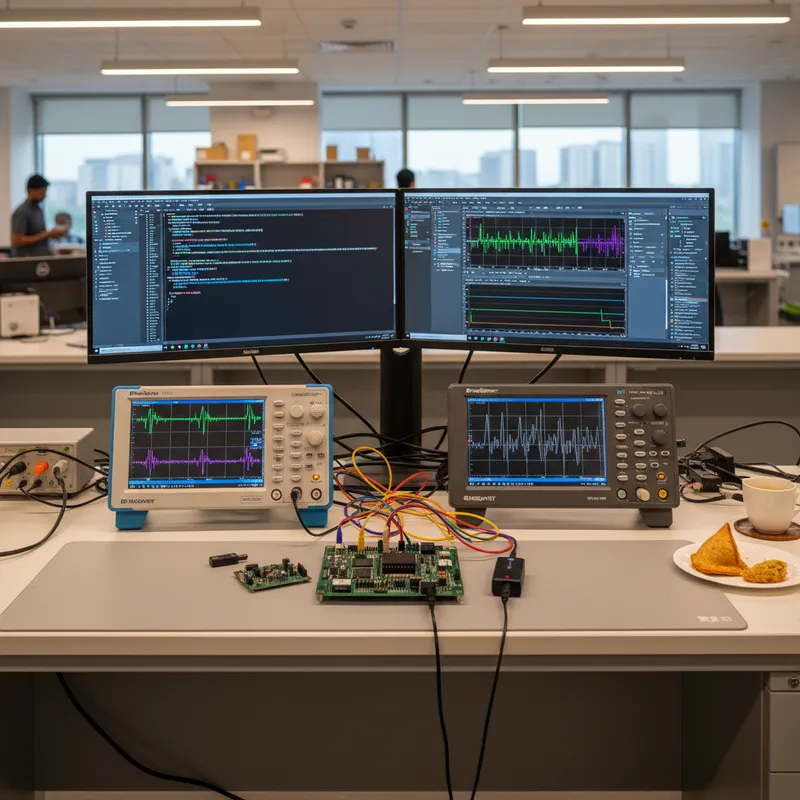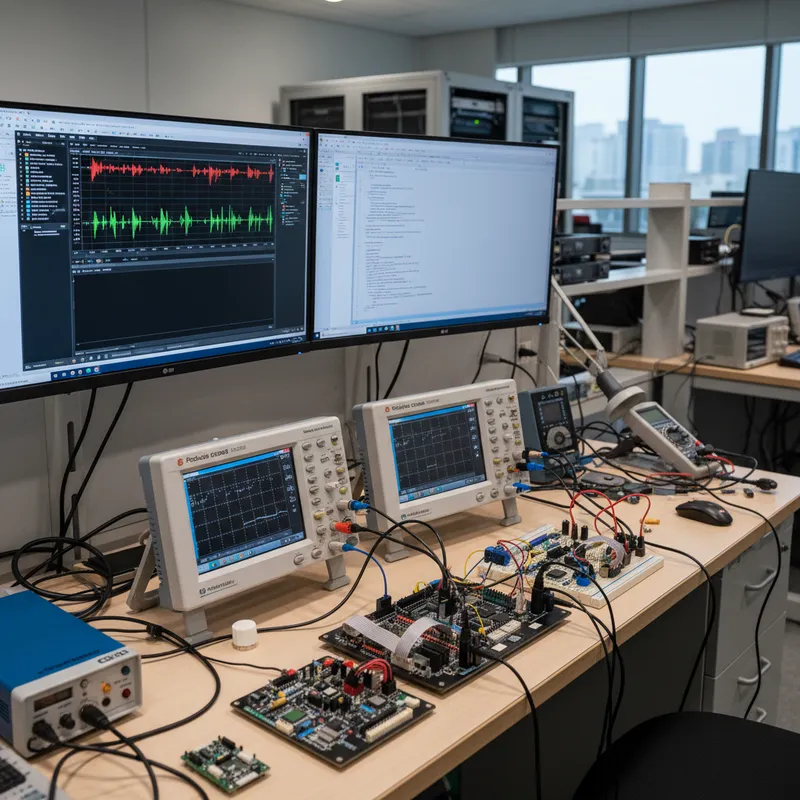
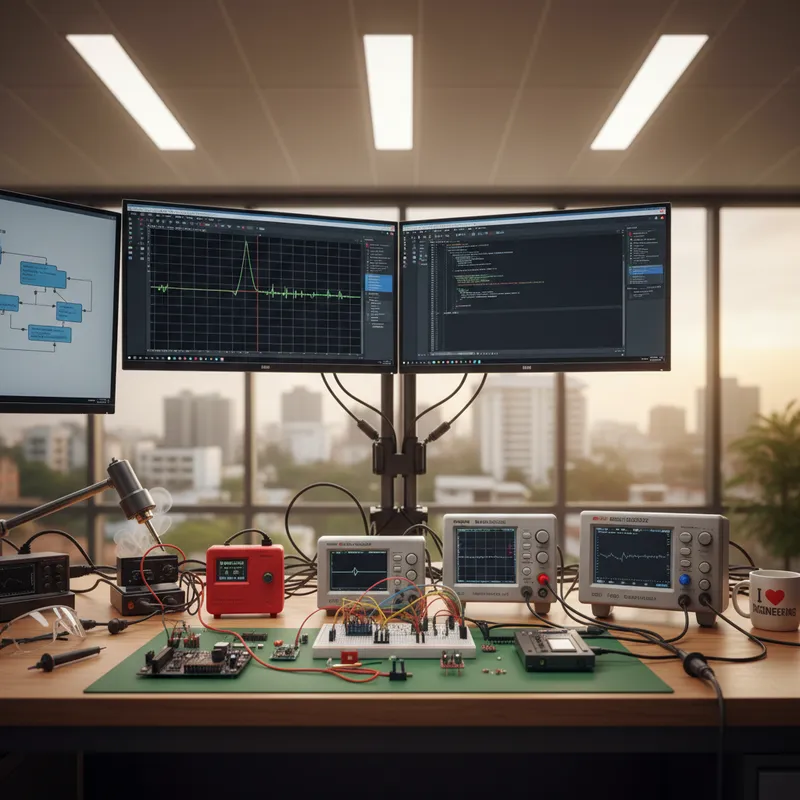
Almost every Indian hardware engineer’s first oscilloscope is an entry-tier instrument bought on a student budget, a Hantek or OWON USB dongle, a Rigol DS1054Z benchtop, or sometimes a Siglent SDS1000X-E. The question that eventually shows up is what comes next: you finish your degree, you take a job at a Bengaluru or Chennai product startup, or you start building a hardware product you actually want to sell, and the cheap scope that served you through college starts missing features that matter. This post is an honest comparison between the entry-tier cluster, Hantek, OWON, Rigol DS1xxx, and the Pico Technology alternatives at the same price tier, written for Indian engineering students, hobbyist-to-commercial makers, and early-stage startup hardware teams who are asking “do I keep what I have, or upgrade, and to what”. The starting point is the PicoScope 2000B Series and its mixed-signal cousin the PicoScope 2205A MSO.
GSAS Micro Systems is an authorized Indian engineering partner for Pico Technology, and we get this question regularly from Indian students graduating into their first hardware jobs and from early-stage startups buying their first company scope. We do not pretend the answer is always “buy a PicoScope”. This post lays out where Pico actually wins at this price tier, where the competitors genuinely have the edge, and what the upgrade decision should hinge on once you move from “learning on a student bench” to “shipping a product from a Bengaluru or Pune startup”.
The competitor cluster: what you probably already own or are looking at
Four instruments dominate the Indian student and hobbyist market at this tier.
Hantek 6022BL / DSO5102P family. The cheapest USB and benchtop oscilloscopes available in India. 8-bit resolution, 20 to 100 MHz bandwidth, small memory buffer, bare-bones software. Hantek’s value proposition is that they are genuinely the cheapest instruments on the market. Software quality is visibly behind the competition, serial protocol decode support is thin, and driver support is Windows-first. For a student building weekend projects on pocket money, a Hantek is a reasonable starting point. For a startup shipping a product, it runs out of headroom very quickly.
OWON VDS1022I / SDS1102 family. Slightly better software than Hantek, similar bandwidth, similar 8-bit resolution, weak protocol decode. Some OWON benchtop models have built-in touch displays that push them one bracket above Hantek in bench convenience. The software and SDK story is thin, and the instrument is built to a cost target.
Rigol DS1054Z and DS1102Z. The DS1054Z is the single most popular entry-level benchtop oscilloscope in the Indian student market. Four channels, 50 MHz rated, 24 Mpts memory, a genuinely capable built-in UI, decent display, reasonable build quality, and a strong unofficial online community. The DS1102Z is the 100 MHz variant. A bandwidth-unlock trick has circulated online for years, we mention it only because everyone knows about it. The real strength of the DS1xxx family is standalone operation: no PC required, good for benches where you do not want to tether a laptop, and a user experience students pick up immediately.
Siglent SDS1000X-E. A different price tier that competes more with the PicoScope 5000D than the 2000B.
The PicoScope alternatives at this tier
Pico’s entry-tier offering is the 2000 Series family:
PicoScope 2000B Series, 70 MHz and 100 MHz variants, USB-powered, 8-bit hardware resolution, PicoScope 7 software with 40+ serial protocol decoders included free, cross-platform drivers for Windows, macOS, and Linux, and a 5-year warranty.
PicoScope 2205A MSO, 25 MHz mixed-signal, 2 analog channels plus 16 digital channels, USB-powered, same PicoScope 7 software and 40+ protocol decoders. This often wins the comparison outright for Indian student protocol-decode work, no other instrument at this price tier includes sixteen digital channels.
PicoScope 2405A, 4-channel 25 MHz USB-powered, compact. Good for multi-channel bench work where pocket-sized ergonomics matter. All three share the same software, SDK, and warranty.
Where PicoScope genuinely wins at this tier
Cross-platform PicoScope 7 software. None of Hantek, OWON, or the Rigol DS1xxx family offer first-class Linux support. A Linux-first hardware engineer, common in the Indian Raspberry Pi, Yocto, and embedded Linux community, has to fight Windows-centric tooling on most entry-tier scopes. PicoScope 7 runs natively on Windows, macOS, and Linux from the same codebase. If your development laptop is a ThinkPad running Ubuntu, this alone is decisive.
40+ serial protocol decoders included free. PicoScope 7 ships with I2C, SPI, UART/RS-232, CAN, LIN, FlexRay, USB, DMX512, 1-Wire, MODBUS, and dozens more, all included, no upgrade fees, no per-protocol charges. Rigol charges per-protocol for most decoders on the DS1xxx line. Hantek and OWON have very limited decode capability. For a firmware engineer debugging an I2C bus at 3 a.m., having every decoder already installed is the difference between solving the problem and shipping the bug.
Mixed-signal at this price tier. The PicoScope 2205A MSO is genuinely unique. Sixteen digital channels plus two analog channels, USB-powered, in a pocket-sized box that costs less than most benchtop mixed-signal scopes. For a firmware engineer at a Bengaluru IoT startup bringing up a new board, the MSO is the instrument that shows you what every SPI chip-select, I2C address, and GPIO is doing simultaneously while you probe the analog power rails, all on one screen, all triggered together. There is no direct equivalent in the Hantek, OWON, or Rigol DS1xxx entry tiers.
Build quality and warranty. Pico ships the 2000 Series with a 5-year warranty as standard. The aluminium shell is well-built and survives years of lab-bench use. Hantek and OWON warranties are shorter and the build quality is visibly cost-driven.
Real SDK on every model. PicoSDK, C, C++, Python, MATLAB, LabVIEW, works identically on the entry-tier 2000B as on the flagship 6000E. An Indian student who learns pyPicoSDK on a 2205A can apply the same code to a 5000D or 6000E in their first startup job without relearning the API. Rigol is SCPI-only at this tier, Hantek and OWON have no production-grade SDK, and the tooling investment does not transfer.
Where the competitors genuinely win
And now the other side of the ledger, because gold-plating our own side would not pass the smell test with any honest Indian engineer.
Standalone operation. Rigol DS1054Z does not need a PC. You plug it into mains power, turn it on, and it works. For an Indian student working on a crowded lab bench or a startup hardware engineer without a laptop to dedicate, this is a real convenience. PicoScope needs a host PC, period, USB-powered, so at least the scope itself does not add a power-supply tangle, but you still need the laptop. For quick spot-check bench measurements on a cluttered bench, a standalone benchtop wins on ergonomics.
Touchscreen UI. Both Rigol and Siglent benchtops at this tier have built-in screens with gesture controls, persistent display modes, and a lot of front-panel buttons. The learning curve from “first time scope user” to “comfortable bench operator” is shorter on a benchtop than on a PC-hosted scope, because the interface is physical. PicoScope 7 is actually excellent once you learn it, but the first five minutes on a Rigol DS1054Z are friendlier than the first five minutes on a PicoScope 2205A, and that matters for student adoption.
Pricing at the absolute bottom. Hantek is genuinely the cheapest option on the market. For an Indian electronics student who only needs a waveform viewer for Arduino debug and weekend projects, Hantek wins the pure sticker-price question. PicoScope’s commercial pricing is a step up from Hantek’s bottom-of-market number, honest fact, not worth dancing around.
Hobbyist community content. The Rigol DS1054Z has years of YouTube tutorials, unofficial review blogs, and community software mods. If you are a student who learns by watching ten hours of YouTube before you touch the knob, Rigol’s community footprint is larger than Pico’s. That said, PicoScope has good documentation and an active support community, but the YouTube-hours advantage goes to Rigol.
The “graduating to commercial work” framing
Everything above matters for the student bench question. The real decision shifts the moment you move from “I am learning electronics” to “I am shipping a product I want to sell”. Four questions change the answer.
Does your test script need to run on the factory line? If you are shipping a hardware product, you will eventually need a production test rig. PicoSDK is the same API across every PicoScope from the 2000B to the 6000E. The Python or C code you write to characterize prototypes on your bench runs unchanged on the production line scope. Rigol’s SCPI interface does not carry the same portability story, you will rewrite the test automation when you upgrade instruments.
Do you need cross-platform host support? If your production test PCs run Linux (common in Indian contract manufacturing) or if your development team uses a mix of macOS and Windows laptops, PicoScope 7 is the only instrument at this price tier that gives you the same software on all three platforms.
Do you want a five-year lifecycle on the instrument? Pico’s 5-year warranty and the company’s track record of supporting old hardware, the 2000 Series has had over a decade of software updates from the same codebase, matters for a startup that cannot afford to rebuy instruments every three years. The entry-tier competitors typically have shorter warranties and more variable software support timelines.
Do you need mixed-signal? If your product is an embedded system with an SPI sensor, an I2C EEPROM, a UART to a companion MCU, and a couple of GPIOs that you need to watch all at once, the PicoScope 2205A MSO is the answer, and no other instrument at this price tier gives you sixteen digital channels.
If the answer to all four is “no, I am just a student and this is my bench scope”, the competitor cluster is fine, buy whichever one fits your budget and learning style. If the answer to any of the four is “yes”, the PicoScope 2000B or 2205A MSO is very likely the right upgrade.
Further reading
- PicoScope 2000 Series on picotech.com, full 2000B and 2205A specifications
- PicoScope 7 software, free download, Windows/macOS/Linux
- Pico Technology partner page, full PicoScope range available in India from GSAS
- PicoScope 2205A MSO product page, mixed-signal entry specifications
- PicoScope 2405A product page, 4-channel compact entry scope
- PicoScope 7 software deep dive, what you get for free with every PicoScope
- PicoScope vs benchtop oscilloscope comparison, broader comparison against traditional benchtops
- PicoScope vs Keysight 200 MHz comparison, higher-tier comparison when the budget scales up
The takeaway for Indian students and startup hardware teams
The Hantek, OWON, and Rigol DS1xxx family are real options and we will not pretend otherwise. For a student learning electronics on a weekend-project budget with no intention of shipping a product, any of them will do the job. The moment the workload changes, you are debugging an embedded firmware problem that needs mixed-signal, your test script needs to run on a Linux production PC, your team standardizes on a cross-platform software stack, or you are building a product you actually want to sell, the PicoScope 2000B or 2205A MSO becomes the right answer, and the upgrade pays for itself in saved time and avoided re-tooling.
GSAS Micro Systems handles PicoScope 2000 Series bring-up, training, and ongoing engineering support across India. Our offices in Bengaluru, Chennai, Hyderabad, Pune, Mumbai, and Delhi NCR work directly with Indian engineering students graduating into their first jobs, early-stage hardware startups buying their first company scope, and small product teams scaling from the bench to the production line with the PicoScope entry tier as the on-ramp.
Also appears in:
Interested in Pico Technology tools?
Talk to our application engineers for personalized tool recommendations.
More from Pico Technology
View all →
How to Buy an Oscilloscope in India (2026): USB vs Benchtop, Bit Depth, Bandwidth: A Buying Guide
5 Jun · 11 min
PicoScope 5000D vs 5000E: Native 16-Bit or FlexRes? A Buyer's Guide for Indian Labs
4 Jun · 11 min
PicoScope 5000E in India: The World's First 4-Channel 16-Bit USB Oscilloscope, Explained
4 Jun · 11 min
PicoScope 7 Goes Native Arm64: Apple Silicon, Snapdragon Windows and Arm Linux Test Benches in India
4 Jun · 11 min
Emulating Processor Power for Thermal Testing: Why Constant Power
7 Oct · 7 min
CRPS and Rack Power Supply Testing: The Six Tests That Matter
7 Oct · 7 min