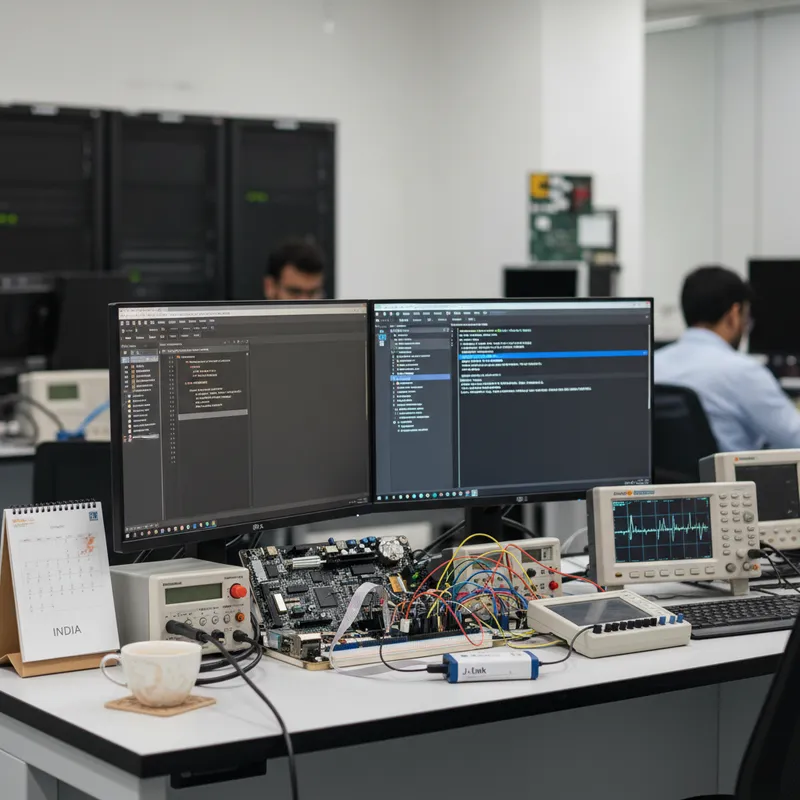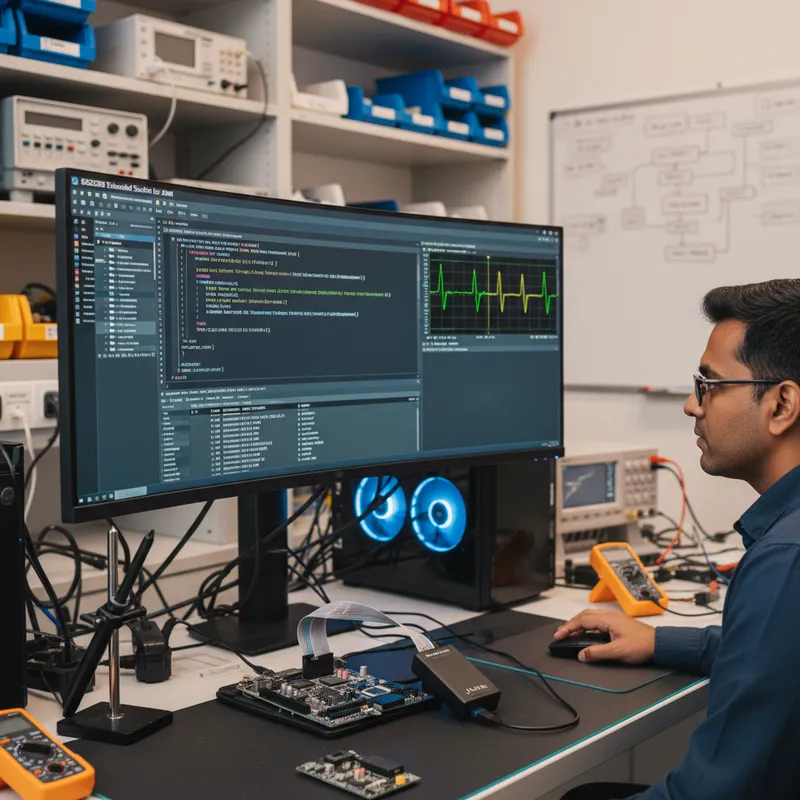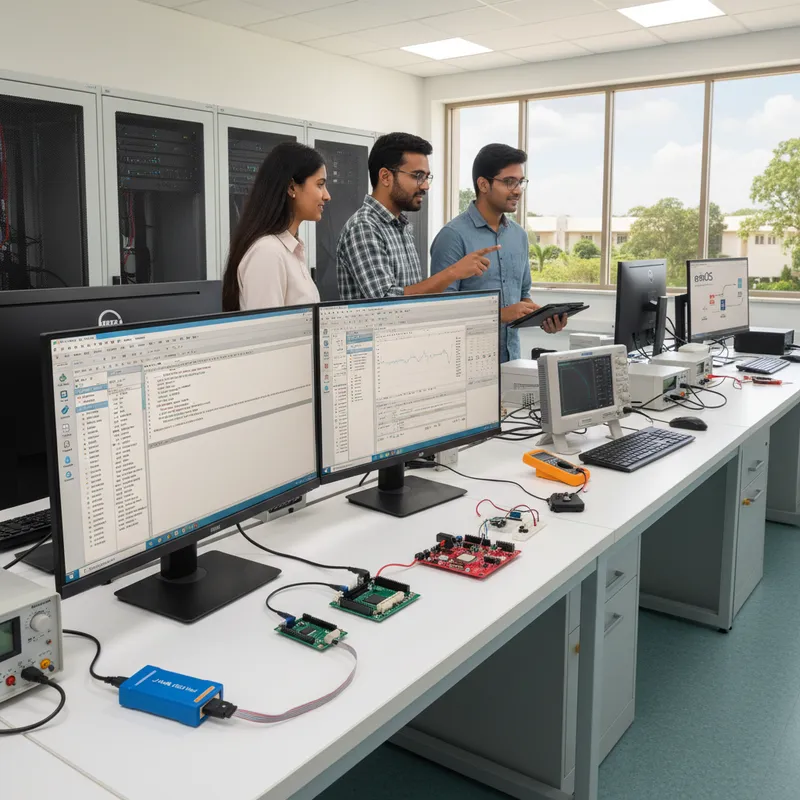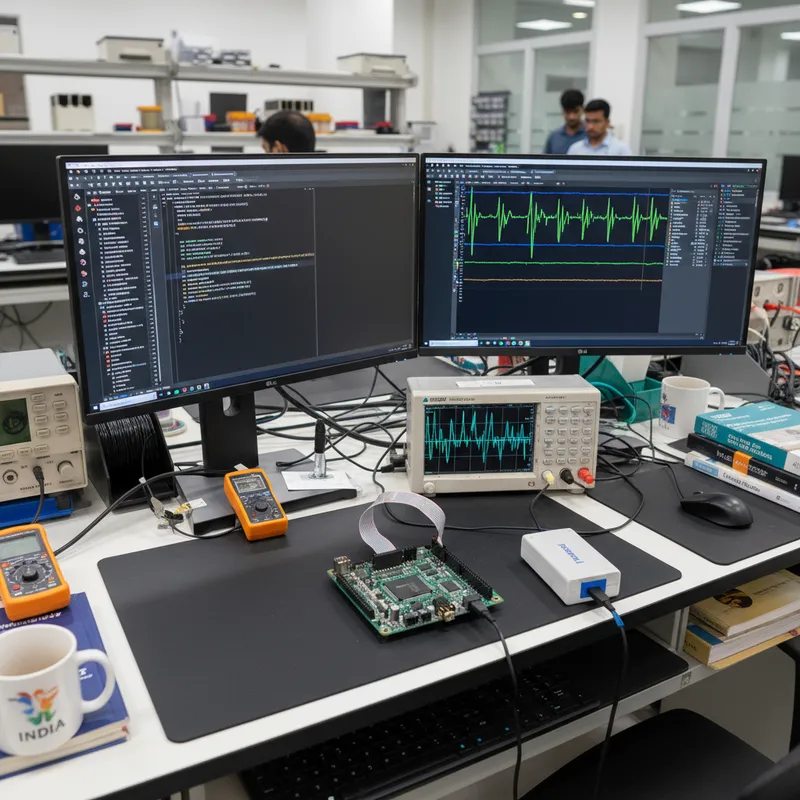
Indian product engineering runs on margin. A 256 KB STM32 part costs measurably less than a 512 KB one, and when your bill of materials is multiplied across tens of thousands of units per quarter, every kilobyte of firmware matters. The compiler and linker you choose determine how much of the silicon’s headroom your firmware actually gets, and for teams evaluating alternatives to the toolchains bundled with Keil and IAR, the SEGGER Compiler and SEGGER Linker shipped inside SEGGER Embedded Studio are a serious option that is often under-evaluated in India.
GSAS Micro Systems is an authorized Indian engineering partner for SEGGER Microcontroller GmbH, and this guide walks Indian Cortex-M teams through what the SEGGER toolchain actually does during optimization, how it compares with GCC and the commercial alternatives, and where teams in Pune, Bengaluru, Chennai, Hyderabad, Mumbai, and Delhi NCR are using it in production.
Why the toolchain matters more than you think
A naive compile of a mid-sized Cortex-M firmware, vendor HAL, FreeRTOS, a TCP/IP stack, application logic, easily produces a binary in the 200–350 KB range. The same source tree, compiled with aggressive optimization and link-time dead-code elimination, frequently drops to 160–260 KB. That 30–40 KB delta is the difference between fitting on a 256 KB part or needing to jump to 512 KB.
For Indian Tier-1 suppliers competing on ECU contracts and for consumer IoT teams negotiating NRE with OEMs, this is not an abstract concern. It shows up as cost of goods sold, and it shows up in the margin calculation that determines whether a project is greenlit at all.
What SEGGER Compiler and SEGGER Linker actually do
SEGGER Compiler is a Clang/LLVM-based C and C++ compiler with SEGGER’s own optimization patches and a runtime library tuned for embedded Cortex-M, Cortex-A, and Cortex-R targets. It is bundled with SEGGER Embedded Studio and available cross-platform on Linux, macOS, and Windows. SEGGER Linker is the companion linker, not a GNU ld fork, but a SEGGER-authored linker that integrates closely with the compiler’s LTO output format and the linker script dialect used by Embedded Studio projects.
Under the hood, the following optimization passes run when you build a Release configuration in Embedded Studio with LTO enabled:
Link-time optimization (LTO). SEGGER Linker and SEGGER Compiler perform whole-program LTO across all object files in the link. The compiler emits LLVM bitcode instead of native object code, and the linker invokes the optimizer across the entire program at link time. Indian product teams routinely see 5–15% code-size reduction and 3–8% performance gain on the same Cortex-M target by enabling LTO compared with non-LTO builds. The effect is most dramatic on codebases that pull in large vendor SDKs where the call graph is sparse relative to the amount of code linked in.
Dead-code elimination. At link time, SEGGER Linker walks the call graph from the entry points forward and removes any function, class method, static global, or read-only data section that cannot be reached. This is where vendor HAL/SDK libraries lose a lot of weight, a typical STM32 HAL or NXP SDK contains thousands of functions, and a specific product uses only a fraction of them.
Section garbage collection. The --gc-sections behaviour reclaims unused .text and .rodata sections. Combined with per-function sections (compiled with -ffunction-sections -fdata-sections), this gives the linker maximum granularity to drop unreachable code.
Smart inlining. Clang/LLVM’s inliner is more aggressive and more accurate than the inlining heuristics in older proprietary compilers. It uses call-site profile information (when available) and a cost model that accounts for Cortex-M instruction encoding density.
Static analysis pass-through. SEGGER Compiler ships Clang’s -Wall -Wextra plus the Clang Static Analyzer integration, which catches null-pointer dereferences, uninitialized-use bugs, and double-free errors at compile time without requiring a separate tool in the build pipeline. For Indian teams without budget for a standalone static analyzer, this is a meaningful free uplift on code quality.
Modern C++ for Cortex-M. SEGGER Compiler supports C++17 and parts of C++20 with embedded-friendly options, no exceptions, no RTTI, no unwind tables, for Indian product teams shipping modern C++ on Cortex-M without paying the size/speed tax of full language runtime.
How it compares to the alternatives
Indian embedded teams typically evaluate four toolchains: GCC (arm-none-eabi), Arm Compiler 6 (ARMCC v6 bundled with Keil MDK), IAR’s EWARM compiler, and SEGGER Compiler inside Embedded Studio. The trade-offs are real and worth being explicit about.
GCC (arm-none-eabi) is free, widely deployed, and mature. It is the default in most open-source SDKs and in many Indian university courses. LTO in GCC has improved significantly in the last five years, but the integrated debug experience with the vendor SDK is typically weaker than a commercial toolchain, you end up stitching together Eclipse plus GDB plus OpenOCD plus a vendor plug-in, and the result is fragile across OS upgrades.
Arm Compiler 6 / ARMCC v6 produces high-quality code, Arm’s own compiler, obviously tuned for Arm cores. It is bundled with Keil MDK subscriptions and runs inside Keil μVision on Windows. Indian teams with an existing Keil investment are usually getting good codegen, but the IDE is Windows-only and the licensing is subscription-per-seat through Arm.
IAR EWARM compiler has a long reputation for excellent code generation, especially on older Cortex-M targets. IAR uses a per-target-family licensing tier, you typically pay separately for the STM32 tier, the NXP tier, the Renesas tier, and so on, and IAR’s IDE is primarily Windows.
SEGGER Compiler is Clang/LLVM upstream plus SEGGER’s optimization and embedded runtime patches. It is royalty-free per seat under SEGGER’s commercial licence, no per-target-family upgrade tax, and Embedded Studio runs on Linux, macOS, and Windows. For Indian teams consolidating across multiple silicon vendors, the cross-platform, cross-silicon single-licence story is compelling.
The honest summary: SEGGER Compiler is not magic. Its codegen is within a few percent of Arm Compiler 6 and IAR on most Cortex-M workloads, and it is generally ahead of GCC with LTO enabled on real-world firmware. The deciding factor for Indian teams is usually the combined package, compiler plus linker plus Embedded Studio plus J-Link debug integration plus Ozone plus SystemView, not any single point of compiler optimization.
Migrating from Keil ARMCC to SEGGER Compiler
Indian teams moving from Keil ARMCC v5 or v6 to SEGGER Compiler need to update a few things. Warning flag names differ (SEGGER Compiler uses Clang’s naming, -Wunused-parameter, not ARMCC’s --diag_suppress=550). Certain __attribute__ extensions that are ARMCC-specific need to be replaced with Clang equivalents. Inline assembly that used Arm-specific __asm syntax with ARMCC literals needs to be rewritten in GCC/Clang extended-asm form. SEGGER publishes a migration guide that covers the common cases, and for teams with substantial existing Keil codebases, the Embedded Studio migration guide for Keil and IAR users is the right starting point.
Indian use cases
Scenarios in this article are illustrative, common patterns Indian engineering teams encounter, not specific named customers.
Illustrative scenario, engineering. A typical Pune-area Tier-1 ECU team is consolidating on Embedded Studio with SEGGER Compiler across STM32, NXP S32K, and Renesas RA platforms. The win is not per-project, it is that one toolchain, one IDE, one debugger, and one set of engineer skills now cover three silicon vendors. Hiring, training, CI/CD, and IT support all get simpler.
Illustrative scenario, consumer IoT. A typical Bengaluru-area consumer IoT team is shipping an nRF52-based wearable on a 256 KB flash budget. Enabling LTO in SEGGER Compiler recovered approximately 12 KB of flash that the team was going to spend on jumping to the next part. That is a real BOM saving.
Illustrative scenario, controller. A typical Chennai-area industrial controller team is building safety-aware C++17 on STM32H7. They use the SEGGER Compiler exception-free, RTTI-free C++ profile, modern language features, deterministic runtime, no hidden allocations. The codebase is reviewed against the team’s internal coding standard and compiled with -Wall -Wextra -Wconversion plus the Clang static analyzer pass on every PR.
Integration recommendation
For an Indian Cortex-M team starting a new project, the default should be Embedded Studio plus SEGGER Compiler plus SEGGER Linker plus a J-Link BASE or PLUS for developer seats and a J-Link PRO for the CI/CD rack. Enable LTO from day one, enable per-function sections, turn on the Clang static analyzer for PR builds, and monitor code size in CI to catch regressions early. Teams migrating from Keil or IAR should plan a single-sprint migration burndown rather than attempting a big-bang cutover.
Further reading
- SEGGER Embedded Studio at segger.com
- SEGGER Embedded Studio product page
- Migrating from Keil MDK and IAR EWARM to SEGGER Embedded Studio
- SEGGER J-Link and STM32: the complete India guide
- J-Link BASE, PLUS, ULTRA, PRO, choosing the right model in India
- SEGGER Ozone power profiling timeline
- SEGGER partner page at GSAS
- SystemView V4 ELF integration for FreeRTOS debugging
Work with GSAS
GSAS Micro Systems is an authorized Indian engineering partner for SEGGER Microcontroller GmbH. We help Cortex-M product teams across Bengaluru, Hyderabad, Chennai, Pune, Mumbai, and Delhi NCR evaluate SEGGER Compiler and Embedded Studio against their existing Keil or IAR investment, plan migrations with realistic timelines, and set up the J-Link and Flasher infrastructure that complements the toolchain in development and production. Talk to our engineering team for a practical codegen comparison on your actual firmware.
Also appears in:
Interested in SEGGER tools?
Talk to our application engineers for personalized tool recommendations.
More from SEGGER
View all →
Meet the GSAS Team at electronica India 2026, Stall H3.I45
15 Sept · 3 min
J-Link Is Now Validated by ST for StellarStudio
13 Sept · 2 min
An AI Agent That Drives the Debugger: SEGGER and Embedder Connect J-Link to the Loop
13 Sept · 6 min
SEGGER J-Link and J-Trace Now Support Andes Trace: Why This Matters for RISC-V
21 Jul · 6 min
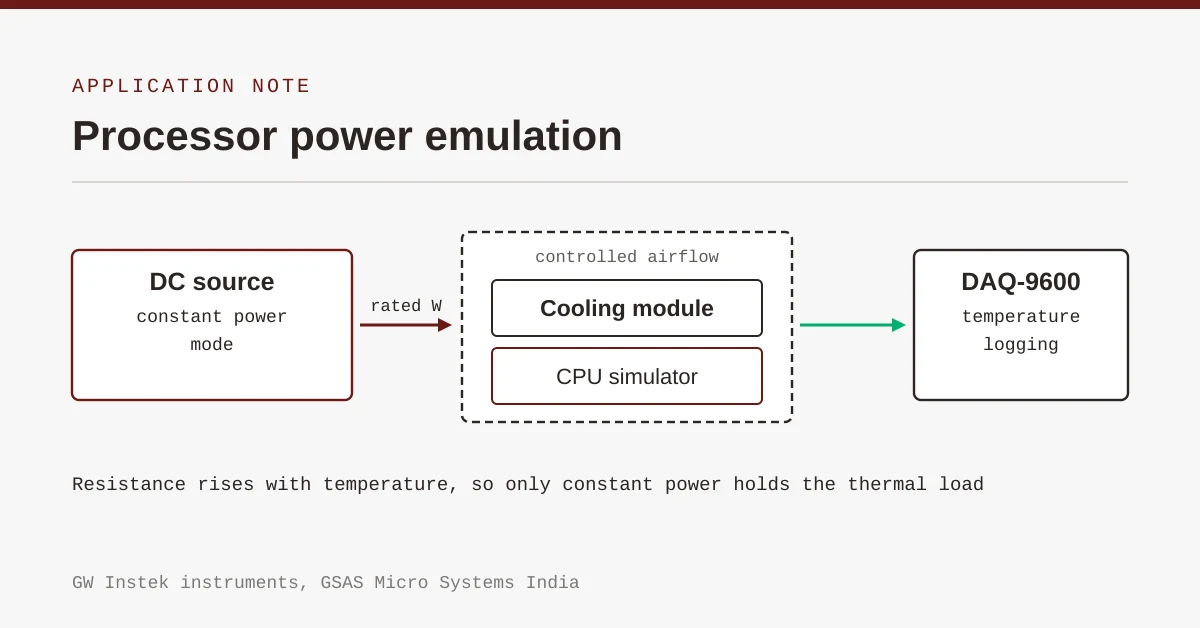
Emulating Processor Power for Thermal Testing: Why Constant Power
7 Oct · 7 min
CRPS and Rack Power Supply Testing: The Six Tests That Matter
7 Oct · 7 min