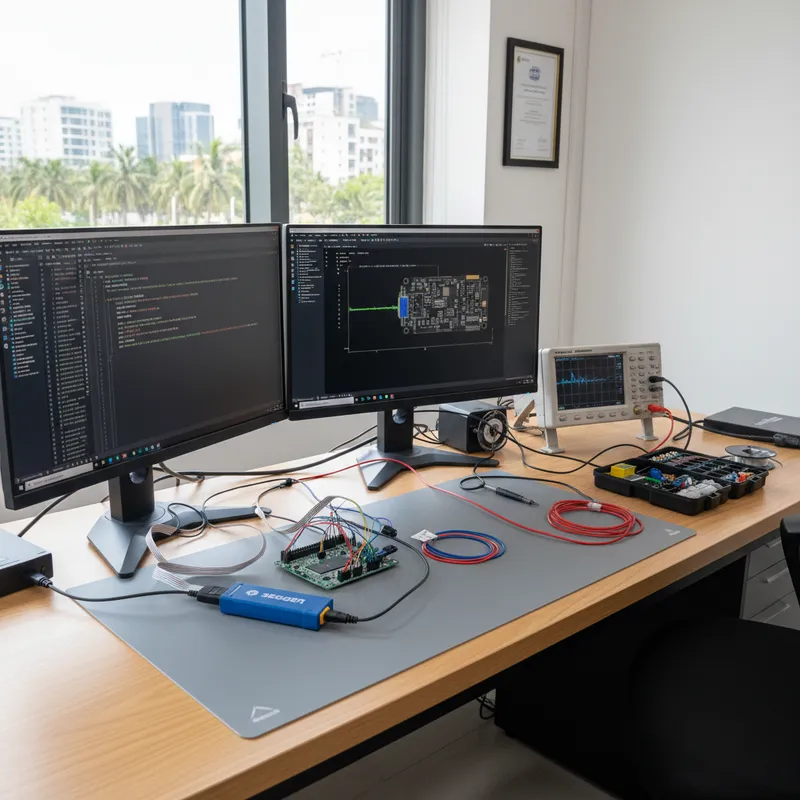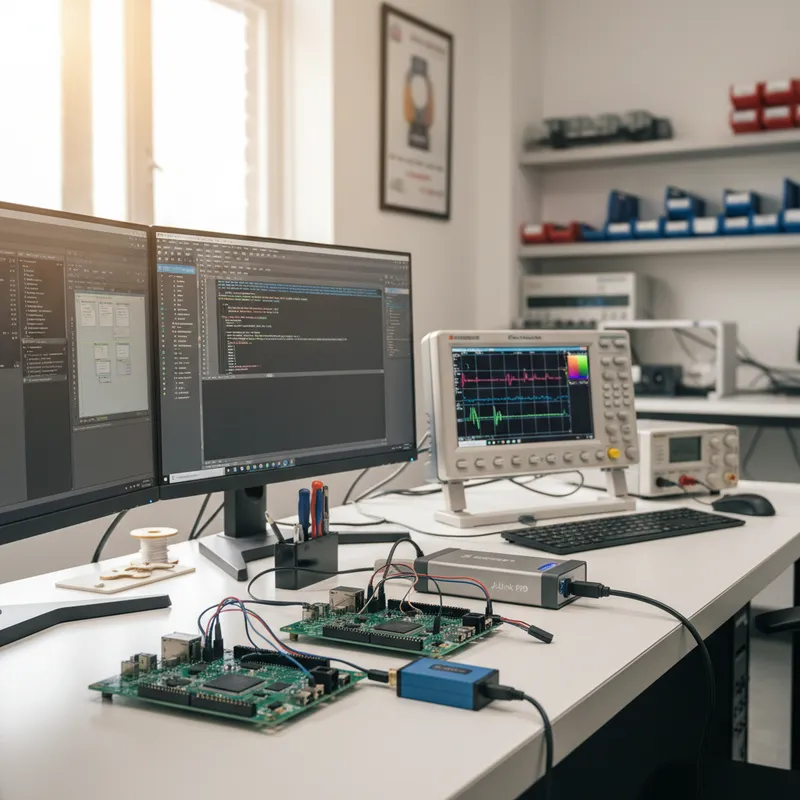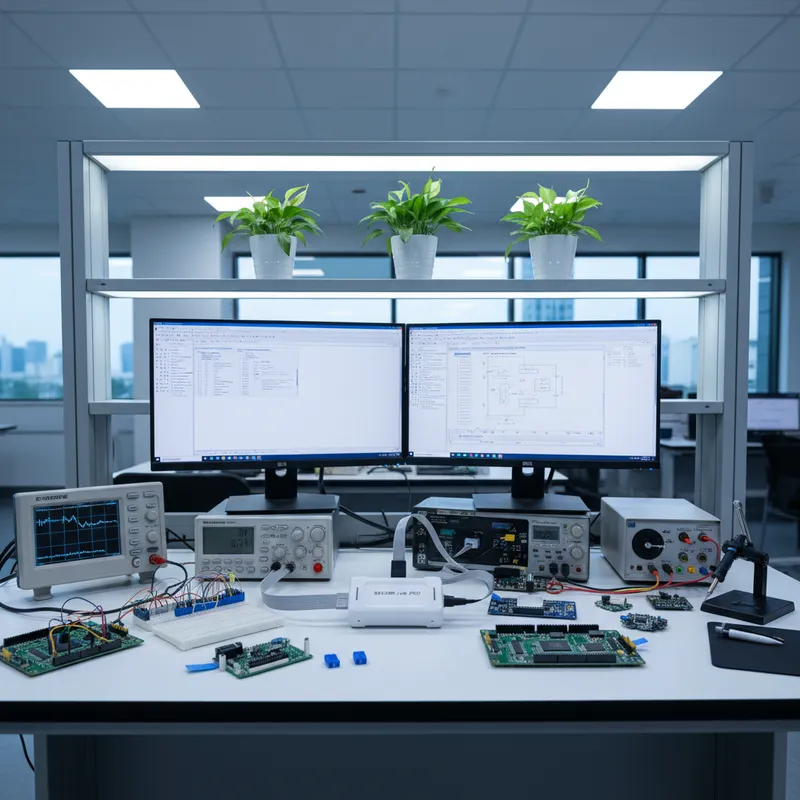
Microchip Technology’s SAM family, the Arm Cortex-M line Microchip inherited when it acquired Atmel in 2016, has quietly become one of the most common silicon choices in Indian product engineering. SAM D21 sits inside a surprising share of Indian consumer IoT startups because so many early prototypes were built on Adafruit and SparkFun boards that ship with SAM D21, and those prototypes then graduated into real products. SAM E54 with its Cortex-M4F, Ethernet MAC, and CAN-FD controllers shows up in Indian industrial gateways, motor control units, and automotive aftermarket diagnostics. SAM L11 with TrustZone-M is the silicon of choice for Indian secure-IoT designs that need a root of trust without paying for a separate secure element. And SAM A5, Microchip’s Cortex-A5 application processor, lands in headless Linux gateway and HMI products designed out of Bengaluru, Pune, and Chennai.
The default debugger across Microchip’s tooling (MPLAB X with the EDBG on SAM Xplained kits, or the Atmel-ICE probe) is competent for evaluation, but most serious Indian SAM product teams upgrade to SEGGER J-Link once they hit a real deadline. This guide explains which J-Link model to buy for which SAM variant, how SEGGER integrates with Microchip’s Harmony 3 and MPLAB Harmony frameworks, how SAM L11 TrustZone provisioning works with SEGGER Flasher Secure, and how Indian EMS lines should be set up for SAM production programming.
GSAS Micro Systems is an authorized SEGGER engineering partner in India. Every product mentioned below is in local stock with INR invoicing and engineering support from our Bengaluru, Chennai, Hyderabad, Delhi NCR, Mumbai, and Pune offices. Microchip has a strong presence in India, including its Chennai office, and many Indian SAM designs move from research labs into commercial products that we help take to production.
The Microchip SAM and PIC32 families at a glance
The SAM catalogue is broader than most Indian engineers realize. SEGGER J-Link supports every Cortex-M variant out of the device database:
- SAM D: Cortex-M0+ general-purpose. SAM D10, D11, D20, D21, D51. SAM D21 is the classic “first product” MCU in Indian consumer IoT.
- SAM L: ultra-low-power Cortex-M0+ and Cortex-M23. SAM L10/L11, SAM L21, SAM L22. SAM L11 adds TrustZone-M for secure IoT.
- SAM C: Cortex-M0+ with 5 V tolerance for industrial and automotive front-end work.
- SAM G: Cortex-M4 general-purpose with integrated DSP instructions.
- SAM 3 / SAM 4: older Cortex-M3 and M4 parts still in use in Indian long-life industrial products.
- SAM E: Cortex-M4F with Ethernet MAC and CAN-FD (SAM E51, SAM E53, SAM E54, SAM E70, SAM E71). SAM E54 and SAM E70 are the go-to parts for Indian industrial Ethernet and CAN-FD gateway designs.
- SAM S / SAM V / SAM N: Cortex-M7 performance-class parts including SAM S70, SAM V70, SAM V71.
- SAM A5: Cortex-A5 application processor (SAMA5D2, D3, D4). Not an MCU but still supported by J-Link for bare-metal bring-up, U-Boot debug, and Linux kernel work.
Beyond SAM, J-Link also supports Microchip’s PIC32 MIPS line (PIC32MX, PIC32MZ, PIC32MM) through SEGGER’s cross-architecture driver with a PIC32 adapter. The main focus for most Indian teams is the SAM Cortex-M line, but it is worth knowing that a single J-Link PRO on the bench can cover both your SAM E54 industrial controller and your legacy PIC32MZ communications module.
Where SAM shows up in Indian product engineering
A few real-world patterns we see repeatedly:
- SAM D21 in consumer IoT: the board that started as a hobbyist prototype becomes the basis for a shipping product. Indian consumer IoT startups use SAM D21 for sensor hubs, connected accessories, and USB-HID peripherals because the bring-up risk is almost zero, the Arduino ecosystem has de-risked the silicon for them.
- SAM E54 in industrial CAN-FD gateways: Indian industrial automation teams pick SAM E54 specifically for its integrated CAN-FD and Ethernet MAC combination. A typical product is a protocol converter that bridges legacy CAN networks on a factory floor to an Ethernet backbone.
- SAM L11 in secure IoT: TrustZone-M lets Indian consumer electronics designers build a secure-boot flow without a discrete secure element. This is increasingly important for products that need to ship with device attestation certificates for Matter or for proprietary cloud onboarding.
- SAM E70 / V71 in industrial Ethernet and automotive-adjacent products: when the design needs a Cortex-M7, Microchip’s SAM E70 and V71 parts compete credibly against the STM32 H7 line and are showing up in Indian motor drives and industrial communication controllers.
- SAM A5 in headless Linux gateways: Indian industrial gateway and HMI products that need Linux but not the thermal envelope of an i.MX 8 pick SAM A5D2 or A5D4, and SEGGER J-Link handles the Cortex-A5 boot-ROM, U-Boot, and early-kernel debug.
Across all of these, the upgrade from Atmel-ICE or EDBG to SEGGER J-Link is the same set of reasons: unlimited flash breakpoints (on J-Link PLUS and above), RTT, Ozone, and a Flasher-based production programming path that lives on the same software stack as the bench debug.
Which J-Link model for SAM work
- J-Link BASE Compact: the minimum practical choice for SAM D21, SAM L10/L11, and other small-footprint M0+ parts. Commercial licensing, full RTT support; the unlimited flash breakpoints license is not included at this tier, it comes with J-Link PLUS and above. See J-Link BASE Compact.
- J-Link PLUS / PLUS Compact: the everyday workhorse for SAM E54, SAM G55, SAM 4, and similar M4 / M4F parts. Up to 1 MB/s download speed, USB 2.0 Hi-Speed, commercial licensing, unlimited flash breakpoints included. This is where most Indian SAM teams start. See J-Link PLUS.
- J-Link ULTRA: USB 2.0 Hi-Speed with download speeds up to 4 MB/s and high-speed RTT. Worth the upgrade for SAM E70 / V71 / S70 Cortex-M7 projects where the firmware image is large, or for SAM A5 bare-metal / U-Boot work where the download window shows up in the daily dev loop. See J-Link ULTRA.
- J-Link PRO: Ethernet interface, important for Indian CI/CD labs that flash SAM boards from a build server. For SAM E54 industrial CAN-FD benches running at 24 V or 48 V bus levels, pair the probe with the separate SEGGER J-Link Isolator; galvanic isolation is not built into the probe itself. See J-Link PRO and the PoE variant.
- J-Trace PRO Cortex-M: add this when you need ETM instruction trace on SAM E70 / V71 / E54 M7 or M4F parts. SAM’s Cortex-M cores expose full ETM trace, and J-Trace PRO captures it for crash analysis and code coverage. See J-Trace PRO Cortex-M.
A practical recommendation: an Indian industrial automation team standardizing on SAM E54 typically ends up with J-Link PLUS on every developer bench and one J-Link PRO in the CI lab, with a single J-Trace PRO Cortex-M shared across the team for serious crash investigation work.
Unlimited flash breakpoints on SAM M4F
One of the most visible SEGGER benefits on SAM parts is unlimited flash breakpoints. SAM Cortex-M4F cores like SAM E54 and SAM G55 expose a small number of hardware breakpoints (typically 6), which is the same FPB limit every Cortex-M shares. Microchip’s own Atmel Studio / MPLAB X debugger honours that limit. J-Link, with the flash breakpoints license included from J-Link PLUS upward, does not, SEGGER rewrites the target instruction stream on the fly so the developer can set 50 breakpoints without thinking about the count.
For an Indian firmware engineer debugging a SAM E54 Ethernet-to-CAN-FD gateway, where the interesting bugs are scattered across a large protocol translation layer, that difference is the one that reclaims hours per day. It is also the single feature most senior Indian firmware engineers quote first when asked why they upgraded from Atmel-ICE to J-Link.
SAM L11 TrustZone secure provisioning with Flasher Secure
SAM L11 is Microchip’s Cortex-M23 part with TrustZone-M and a dedicated security subsystem, targeting Indian consumer-IoT designs that need a root of trust without a discrete secure element. The secure flow on SAM L11 involves:
- Installing the initial boot code in the secure partition
- Provisioning device-unique keys via Microchip’s secure boot interface
- Locking the secure region and burning one-time-programmable fuses
- Shipping signed firmware updates that are verified by the secure boot
For a small prototype run, Indian teams can do this manually via MPLAB X. For volume production at an Indian EMS, manual provisioning is not viable, every device needs the same flow reliably, auditable, and without exposing cleartext keys to line operators. This is what SEGGER Flasher Secure is built for.
Flasher Secure lets the SAM L11 firmware image and its device-unique key material be delivered to the Indian EMS in encrypted form. The line operator sees an opaque container; Flasher Secure decrypts and programs the part without the operator ever handling cleartext firmware. For SAM L11-based Indian consumer IoT products shipping with device attestation certificates, this is the production flow we recommend and support. For a deeper walkthrough, see our Flasher Secure for Indian EMS guide.
Ozone and SystemView with MPLAB Harmony 3
Microchip Harmony 3 is the HAL framework that sits underneath most modern SAM projects. Harmony ships with FreeRTOS integration out of the box, which is the RTOS Indian SAM teams use most. Two SEGGER tools pair especially well with Harmony:
- Ozone: opens a SAM ELF directly, no IDE required. Ozone supports SWD and JTAG connections via J-Link, handles SAM E54 and SAM E70’s complex clocking, and gives Indian teams a cross-platform debug UI that is identical across Windows, Linux, and macOS. For Indian consulting firms servicing multiple SAM customers from a single toolchain, Ozone removes the MPLAB X installation burden.
- SystemView: drops into any Harmony 3 + FreeRTOS project with minimal code changes. The SystemView recording runs over RTT, so no additional probe hardware is needed. For SAM E54 industrial gateways where the interesting bugs live in the interaction between the Ethernet ISR, the CAN-FD ISR, and a FreeRTOS task, SystemView is typically the first place the root cause becomes visible.
For a concrete walkthrough of the SystemView v4 workflow on Cortex-M, see our SystemView v4 ELF integration guide.
RTT on SAM for real-time telemetry
RTT (Real-Time Transfer) is the SEGGER feature most SAM teams come to depend on. On a SAM E54 CAN-FD gateway, logging every CAN frame at 1 Mbit/s over UART is out of the question, the UART cannot keep up and the byte costs would perturb timing. RTT uses the SWD pins already in place, runs at high speed over J-Link ULTRA, and does not stop the CPU.
Indian SAM teams typically integrate RTT into their Harmony 3 project by adding SEGGER_RTT.c and routing FreeRTOS printf through SEGGER_RTT_printf. A Python wrapper around JLinkRTTClient captures the log into a CSV for regression runs. For fault debugging specifically, our Cortex-M hard-fault debug with RTT guide covers how to emit a full fault dump over RTT so the engineer on-call does not need physical access to the failing board.
Production programming SAM with SEGGER Flasher
The SEGGER Flasher family supports every SAM variant from the same device database J-Link uses. For Indian EMS production, the common configurations:
- Flasher Compact / Flasher PRO: benchtop and low-volume line programming for SAM D, SAM L, SAM C, SAM E, SAM S.
- Flasher ATE2: rack-mounted ATE integration for high-volume SAM production. Widely used on Indian EMS lines running automated test plus programming for consumer IoT and industrial products. See our Flasher ATE2 production guide.
- Flasher Hub-4 and Flasher Hub-12: gang programming for SAM D21 / SAM L21 consumer IoT volume runs.
- Flasher Secure: the correct tool for SAM L11 TrustZone and any SAM product shipping with secret key material.
Because Flasher shares its device database with J-Link, the flash algorithm validated on the engineering bench is bit-for-bit identical to the one running on the Indian EMS line. No algorithm drift between lab and factory.
Buy SEGGER J-Link and Flasher for Microchip SAM in India from GSAS
GSAS Micro Systems is an authorized SEGGER engineering partner in India for every SEGGER product mentioned in this guide. Whether you are a startup building a SAM D21 consumer IoT device, an industrial automation team developing a SAM E54 CAN-FD gateway, a secure IoT designer provisioning SAM L11 TrustZone parts, or an EMS planning Flasher ATE2 integration, we will help you pick the right J-Link model, the right Flasher variant, and the right SEGGER software stack (Ozone, SystemView, RTT, Embedded Studio, embOS) for your project. Contact us for a hands-on demo at any of our Bengaluru, Chennai, Hyderabad, Delhi NCR, Mumbai, or Pune offices, or visit our SEGGER India partner page for the full portfolio.
Further reading
- SEGGER J-Link model selection guide for India
- SEGGER J-Link for STM32 complete guide
- SEGGER J-Link for Nordic nRF52 BLE development
- SEGGER J-Link for Renesas RA, RX, RH850 in India
- SEGGER SystemView v4 ELF integration
- Cortex-M hard-fault debug with RTT
- Flasher ATE2 for Indian EMS production programming
- Flasher Secure for encrypted firmware on Indian EMS lines
- SEGGER J-Link official product page: segger.com/products/debug-probes/j-link
Interested in SEGGER tools?
Talk to our application engineers for personalized tool recommendations.
More from SEGGER
View all →
Meet the GSAS Team at electronica India 2026, Stall H3.I45
15 Sept · 3 min
J-Link Is Now Validated by ST for StellarStudio
13 Sept · 2 min
An AI Agent That Drives the Debugger: SEGGER and Embedder Connect J-Link to the Loop
13 Sept · 6 min
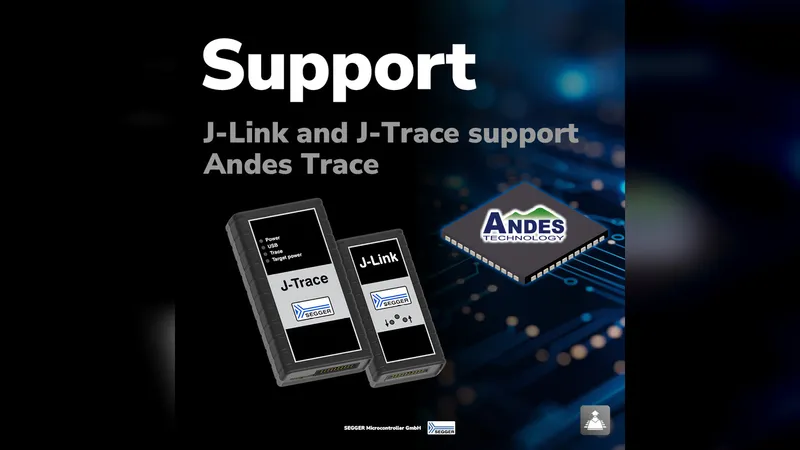
SEGGER J-Link and J-Trace Now Support Andes Trace: Why This Matters for RISC-V
21 Jul · 6 min
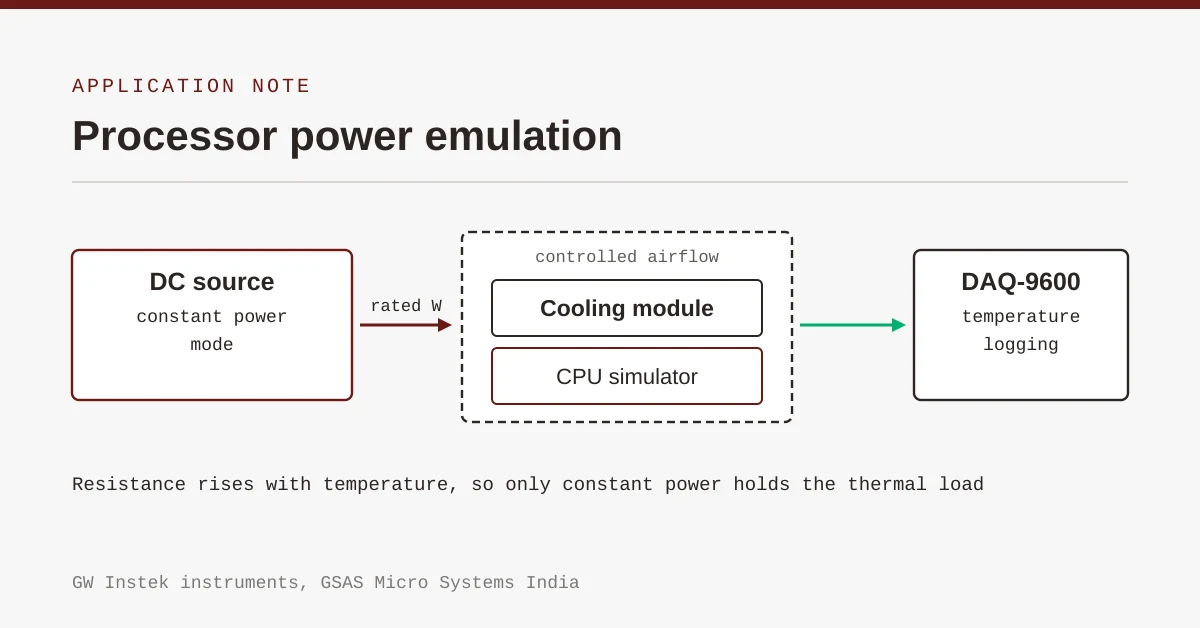
Emulating Processor Power for Thermal Testing: Why Constant Power
7 Oct · 7 min
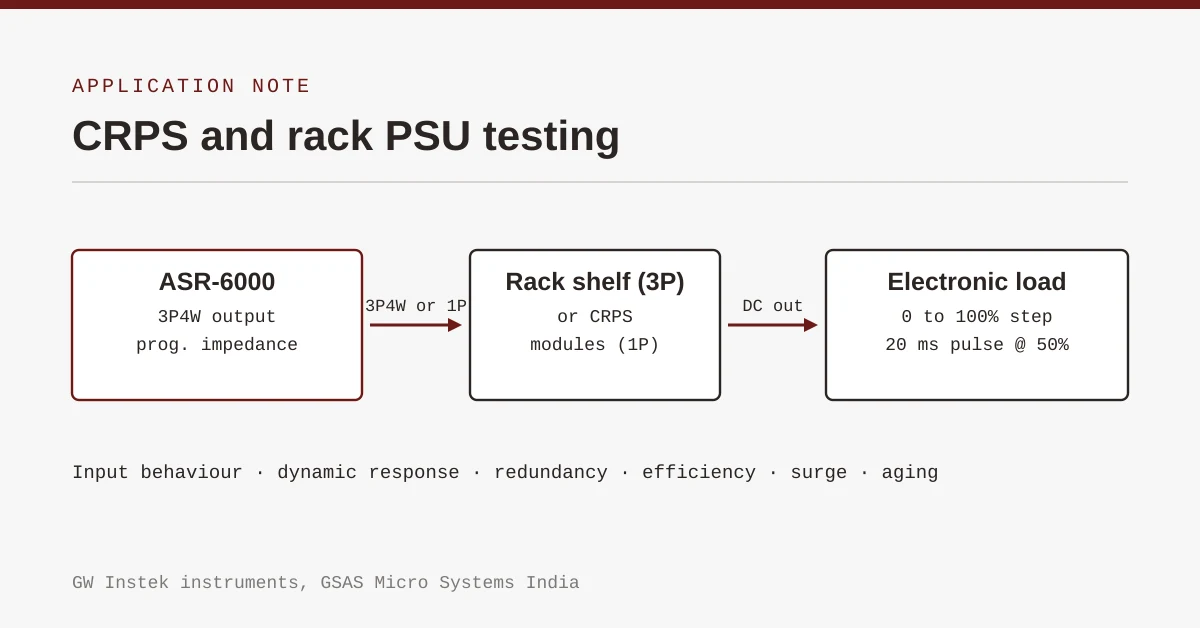
CRPS and Rack Power Supply Testing: The Six Tests That Matter
7 Oct · 7 min